Quartz Countertop Tariffs 2026: 25% or 50% Started August 15
A new U.S. safeguard tariff on quartz surface products is already live. For covered goods from non-exempt countries, the first-year additional rate is 25% inside the quota and 50% after the quota is exhausted.
Effective date: August 15, 2026 at 12:01 a.m. Eastern. This one is active, not proposed.
The rate table
| Entry period | Within quota · 9903.45.30 | Over quota · 9903.45.31 |
|---|---|---|
| Aug. 15, 2026–Aug. 14, 2027 | 25% additional | 50% additional |
| Aug. 15, 2027–Aug. 14, 2028 | 23% additional | 49% additional |
| Aug. 15, 2028–Aug. 14, 2029 | 21% additional | 48% additional |
| Aug. 15, 2029–Aug. 14, 2030 | 19% additional | 47% additional |
Those rates are cumulative. They sit on top of the ordinary Chapter 68 or Chapter 70 duty and any antidumping, countervailing, or other applicable charges.
What counts as QSP
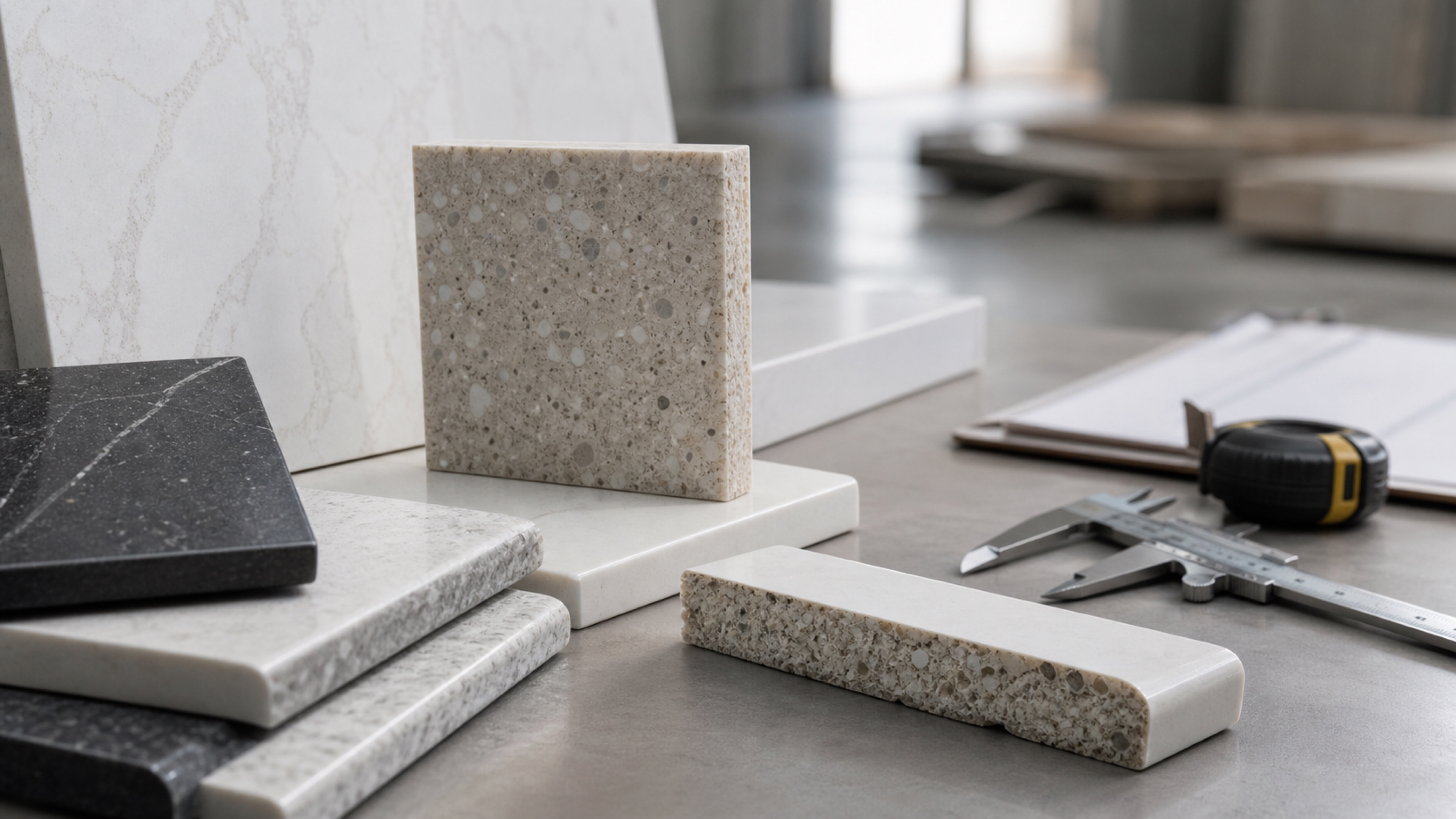
U.S. note 41 covers slabs and other surfaces made from a mixture that contains predominantly silica plus a resin binder, where silica is greater by actual weight than any other single material. Finished countertops, backsplashes, vanity tops, flooring, wall facing, shower surrounds, mantels, and tiles can all be caught. Cutting or finishing the slab in a third country doesn’t automatically remove it from scope.
The listed classifications are 6810.99.0020, 6810.99.0040, and 7020.00.6000. But the HTS number isn’t the whole test. The physical composition and product description still control.
Quarried stone products—granite, marble, soapstone, and quartzite—are outside this QSP definition. “Looks like stone” is not a classification method. Neither is “the supplier called it engineered quartz.”
The quota is real
For the first year, the annual quota is 13,006,426 square meters, divided into four quarterly limits of 3,251,606 square meters. CBP can carry unused quantity into the next quarter. Once the available quantity is gone, covered entries use the over-quota heading.
That means yesterday’s entry result doesn’t prove today’s quota status. A calculator can model the rate tied to the Chapter 99 heading you supply, but it shouldn’t pretend to know how much quota remains at the instant your shipment enters.
Country exemptions
The exemption list is long. Canada and Mexico are exempt, as are listed free-trade partners, developing countries, and Caribbean Basin beneficiaries in U.S. note 41(c). Don’t simplify that into “all FTA countries” or “all developing countries.” Check the current note against the actual origin.
Margin damage
On $40,000 of covered customs value, a 25% additional duty is $10,000. The 50% over-quota rate is $20,000. That’s before the ordinary duty, trade-remedy charges, brokerage, or delivery costs.
If you sell countertops, vanities, tile, or furniture made with imported quartz surfaces, recheck open purchase orders now. Don’t wait for the carrier invoice to explain your margin.
Model the exact filed heading
The public calculator can now evaluate 9903.45.30 or 9903.45.31 when you supply the legally determined QSP heading. It does not decide quota status, classify the product, or infer the heading.
Open the exact-input duty calculator See TariffShieldQuick answers
No universal current U.S. tariff rate is available from country of origin alone.
Classification, product scope, origin, entry time, base duty, Chapter 99 treatment, quota or certification facts, and exceptions can change the result. Missing fact? Keep the number in review.
Official sources
Checked through: August 17, 2026 at 13:00 UTC. Re-review required no later than August 24, 2026 at 13:00 UTC or sooner if an official source changes.
Disclaimer: Informational content only. Verify the current HTSUS and CBP instructions or use a licensed customs broker for an entry-specific decision.