Shopify Food Recall Batch Tracking After Bulk Salmonella Ingredient Alerts
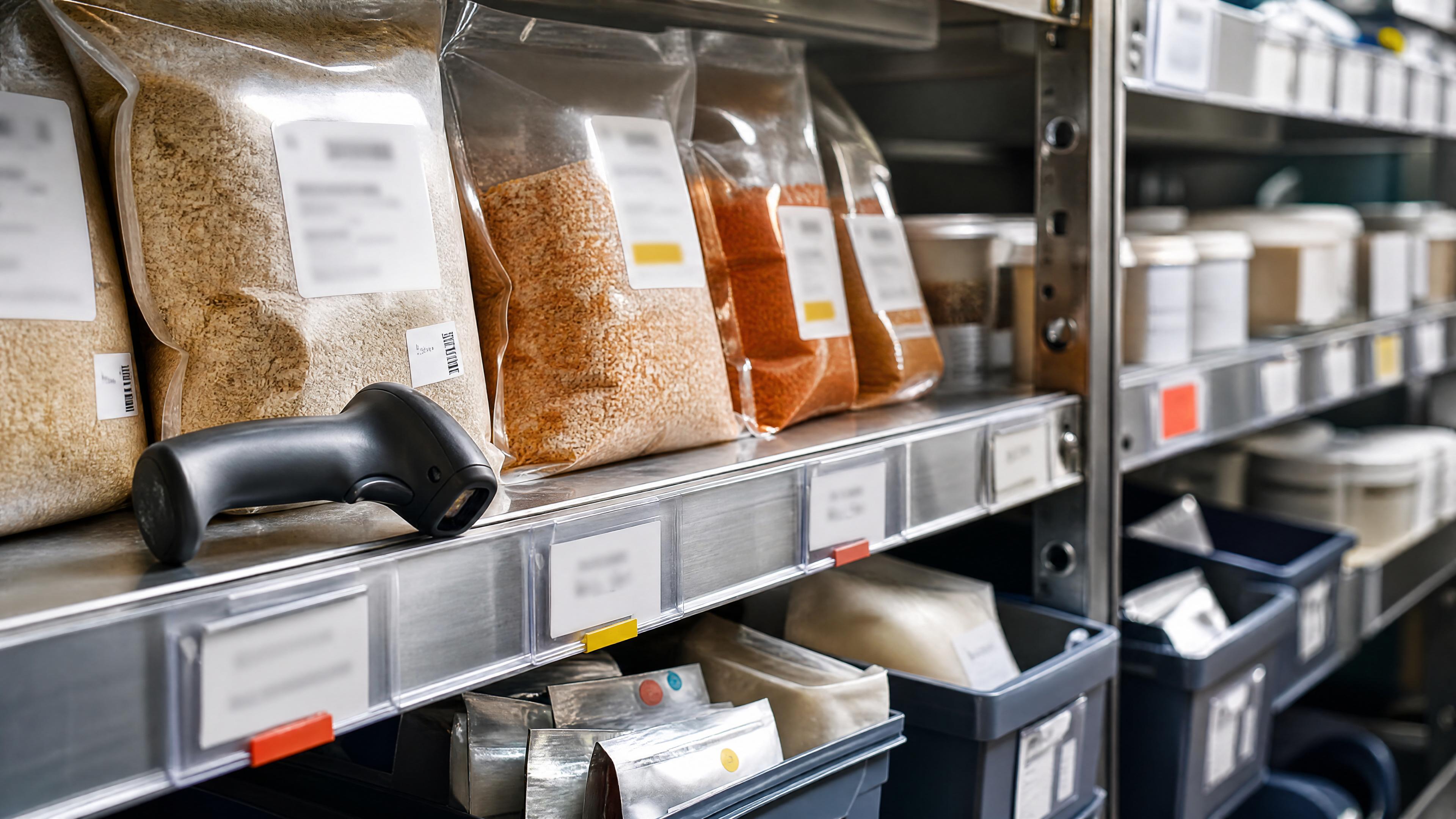
A new Class I FDA food recall is a sharp reminder that Shopify food and beverage merchants do not only need to track finished goods. They also need a way to trace supplier ingredients, lots, production batches, and customer-facing products when a problem starts upstream.
The FDA enforcement record identifies an ongoing Class I recall for Honeyville, Inc. involving (BULK) SPL-BEV Banana CWT (Banana Smoothie); Super Sack Tote Item# 355-0099. The reason given is that the firm received and used a potentially Salmonella-contaminated ingredient to manufacture various products. The record lists lot 0325357B201, 4,980 pounds, distribution to California and Utah consignees, a recall initiation date of April 21, 2026, and a report date of June 3, 2026: FDA openFDA enforcement record[1].
For a small merchant, the operational lesson is not that this exact bulk product will appear in a Shopify catalog. It probably will not. The lesson is that a recall can start with one supplier ingredient and still force decisions across many downstream SKUs.
Quick answer
When a recall starts with an ingredient, merchants need three records ready before the alert arrives: the supplier lot, every internal batch that used it, and every saleable product connected to those batches. The FDA says openFDA food enforcement reports come from the FDA Recall Enterprise System and are updated weekly after recalls are classified: openFDA food enforcement overview[2]. FDA recall resources also explain that recalls remove or correct products that may be defective or potentially harmful: FDA recalls, market withdrawals, and safety alerts[3].
For Shopify merchants selling food, beverages, supplements, cosmetics, or any product where lot-level safety matters, that means generic product inventory is not enough. You need batch tracking that can answer: which lots are affected, where the stock is, who received it, and what needs to be held, removed, refunded, or messaged.
ShelfLife is built around that operating problem: expiry dates, batch records, supplier-linked lots, and recall-ready product histories.
What happened in the FDA record
The FDA enforcement record describes an ongoing Class I recall tied to a bulk banana smoothie product. The item is not a consumer-facing Shopify product page. It is a bulk ingredient/product line used in production. The recall reason says the firm received and used a potentially contaminated Salmonella ingredient to manufacture various products: FDA openFDA enforcement record[1].
That is exactly why batch tracking matters. A merchant may know that Product A is in inventory. They may even know how many units are left. But during an ingredient-driven recall, the more important questions are different:
- Which supplier lot entered the building?
- Which internal production batches used it?
- Which finished SKUs contain those batches?
- Which units are still on hand, in transit, or already sold?
- Which customers, wholesale accounts, or fulfillment locations need action?
If those answers live in email, spreadsheets, supplier invoices, and memory, response time slows down. In food safety, slow response is the risk.
Why Class I changes the operating standard
FDA recall classifications matter because they reflect health risk. FDA's recall resources explain that recalls remove or correct products that may be defective or potentially harmful, and FDA oversees recall strategy, classification, and adequacy once a recall is classified: FDA recalls, market withdrawals, and safety alerts[3]. The Honeyville record is marked Class I, the highest FDA recall classification: FDA openFDA enforcement record[1].
For merchants, Class I should trigger the strictest workflow:
- Stop sale on potentially affected products.
- Quarantine affected and possibly affected stock.
- Preserve supplier, lot, and receiving records.
- Identify downstream products and orders.
- Prepare customer, wholesale, or fulfillment notifications where appropriate.
- Document every action and timestamp.
This is not about overreacting to every supplier email. It is about having a repeatable playbook when the facts are serious.
Ingredient recalls are harder than finished-product recalls
Finished-product recalls are painful, but they are conceptually simple: find the product, match the lot, pull the units, contact affected buyers. Ingredient recalls are messier because one contaminated input can appear across multiple finished products.
A banana smoothie ingredient can become smoothie bases, beverage mixes, private-label products, or components inside another production process. A spice blend can affect sauces, prepared meals, snacks, or meal kits. A nut ingredient can affect cookies, bars, toppings, and bulk bins. The problem spreads through the bill of materials.
That creates a traceability gap for Shopify merchants. Standard inventory records can tell a merchant how much product is available, but they do not automatically tell the merchant which supplier lot went into which finished product batch. That extra relationship has to be captured somewhere.
For food and beverage merchants, that somewhere should not be an inbox search.
The batch-tracking workflow merchants need
A practical recall-ready workflow has five layers.
| Layer | What to record | Why it matters |
|---|---|---|
| Supplier lot | Supplier, lot code, certificate of analysis if available, received date, and quantity | Identifies the upstream source when a recall begins |
| Internal batch | Production date, ingredients used, staff and process notes, and quantity produced | Connects supplier input to finished goods |
| Finished SKU | Shopify product, variant, batch, expiry date, and location | Shows which saleable units may be affected |
| Order and customer | Order IDs, fulfillment dates, wholesale accounts, and destinations | Supports targeted notices instead of broad panic |
| Action log | Hold, release, disposal, refund, notification, timestamp, and owner | Creates a defensible record of response |
The FDA's Food Traceability Rule under FSMA is not a universal rule for every product, but it is a useful reference point for how regulators think about key data elements and traceability events in higher-risk foods: FDA FSMA food traceability rule[4]. Even when a merchant is outside the exact covered-food list, the operating logic is still useful.
How to handle the first hour after a recall alert
The first hour should be boring because the process is already known. Do not start by rewriting policy. Start by preserving facts and stopping spread.
- Save the source notice or enforcement record.
- Search supplier lots, ingredient names, lot codes, and received dates.
- Put affected lots and possibly affected finished products on hold.
- Pause listings or variants only when the product/batch match is plausible.
- Pull inventory by location.
- Export affected orders.
- Assign one person to customer/vendor communication and one person to evidence collection.
- Record every action.
FDA recall resources emphasize that recall information is specific to the affected product, firm, lot, and recall classification: FDA recalls, market withdrawals, and safety alerts[3]. Merchants should use the same discipline internally. Do not guess that every related SKU is affected, but do not keep selling while the batch relationship is unclear.
Where Shopify merchants usually break down
The breakdown is usually not the big product. It is the connector between records.
A merchant can find the supplier invoice. Another person can find the purchase order. Someone else can find the Shopify SKU. But nobody can quickly prove whether lot 0325357B201 was used in Batch B, which became Product C, which shipped to Orders D through H.
That is the gap ShelfLife is meant to close. For expiry-driven merchants, batch records often start as a date-control problem. The same records become recall infrastructure when the issue is contamination, allergens, mislabeling, or ingredient substitution.
The useful question is simple: if a supplier calls at 4:45 p.m. on a Friday, can you find every affected Shopify order before dinner?
A simple merchant checklist
Use this checklist before the next recall, not after it.
- Require supplier lot numbers on receiving records.
- Record internal batch IDs whenever ingredients are transformed, repacked, bundled, or relabeled.
- Attach expiry dates and lot IDs to finished inventory.
- Keep separate fields for supplier lot and internal batch.
- Map batches to Shopify products and variants.
- Keep a hold/release status for each batch.
- Export affected orders by batch, not just by SKU.
- Test the workflow quarterly with one mock recall.
The FDA enforcement record in this case lists a specific lot, quantity, distribution pattern, initiation date, and report date: FDA openFDA enforcement record[1]. If a merchant cannot map those fields to internal records, the recall response depends on manual investigation.
Why this matters even when stock is on hold
The FDA record says the recalled quantity was on hold at a customer location: FDA openFDA enforcement record[1]. That detail is reassuring for this specific record, but it does not remove the broader lesson. Holds only work when the right inventory is identified early.
For Shopify merchants, the equivalent is a location-level hold, a batch-level hold, or a product-level sales pause. If a batch is still in receiving, the response is easy. If it is already in finished goods, the response is harder. If it has shipped, the response becomes customer-facing.
The sooner a merchant can narrow the affected batch, the fewer customers and products need to be disturbed.
What to put in ShelfLife
For a product category with recall risk, ShelfLife should become the place where operational facts live:
- supplier and receiving date;
- supplier lot and internal batch;
- product, variant, and location;
- expiry or best-by date;
- quantity produced, received, sold, held, or disposed;
- hold/release status;
- recall notes and source links;
- order/customer export references.
That turns a recall from a search project into a response workflow.
FAQ
What is the main Shopify lesson from this FDA recall?
The main lesson is that merchants need to track ingredient lots through finished products. SKU-level inventory alone does not answer which batches used a recalled ingredient.
Is this recall about a Shopify product?
No. The FDA record describes a bulk banana smoothie product used in manufacturing, not a Shopify listing. The Shopify lesson is about upstream ingredient traceability and downstream batch response.
What does Class I mean for merchant operations?
Class I should trigger the strictest internal workflow: stop sale where needed, quarantine affected stock, identify downstream products, preserve records, and document actions.
Can Shopify inventory tracking replace batch tracking?
No. Shopify inventory tracking is useful for quantities and locations, but batch tracking connects supplier lots, internal production, finished SKUs, and orders.
How often should merchants test recall readiness?
Quarterly is a reasonable baseline for food, beverage, supplement, cosmetic, or expiry-sensitive merchants. The test should start with one supplier lot and end with a list of affected products and orders.
What records should be kept for each batch?
Keep supplier, lot code, receiving date, production date, ingredients used, finished SKU, variant, location, quantity, expiry date, and action history.
Where does ShelfLife fit?
ShelfLife helps merchants keep expiry and batch records tied to operational inventory, so recalls, holds, and customer-impact checks can happen faster.
Disclaimer
This article is general operational information for ecommerce merchants. It is not legal, food safety, medical, regulatory, or recall-management advice. Always verify product-specific recall facts with FDA, your supplier, qualified counsel, and appropriate food-safety professionals before making customer, disposal, refund, or compliance decisions.