U.S. Drone Tariffs 2026: 25% and 100% Start September 3
The U.S. is adding a 100% Section 232 duty to the highest-risk drone categories and 25% to covered small drones without thermal imaging. The first phase starts September 3, 2026.
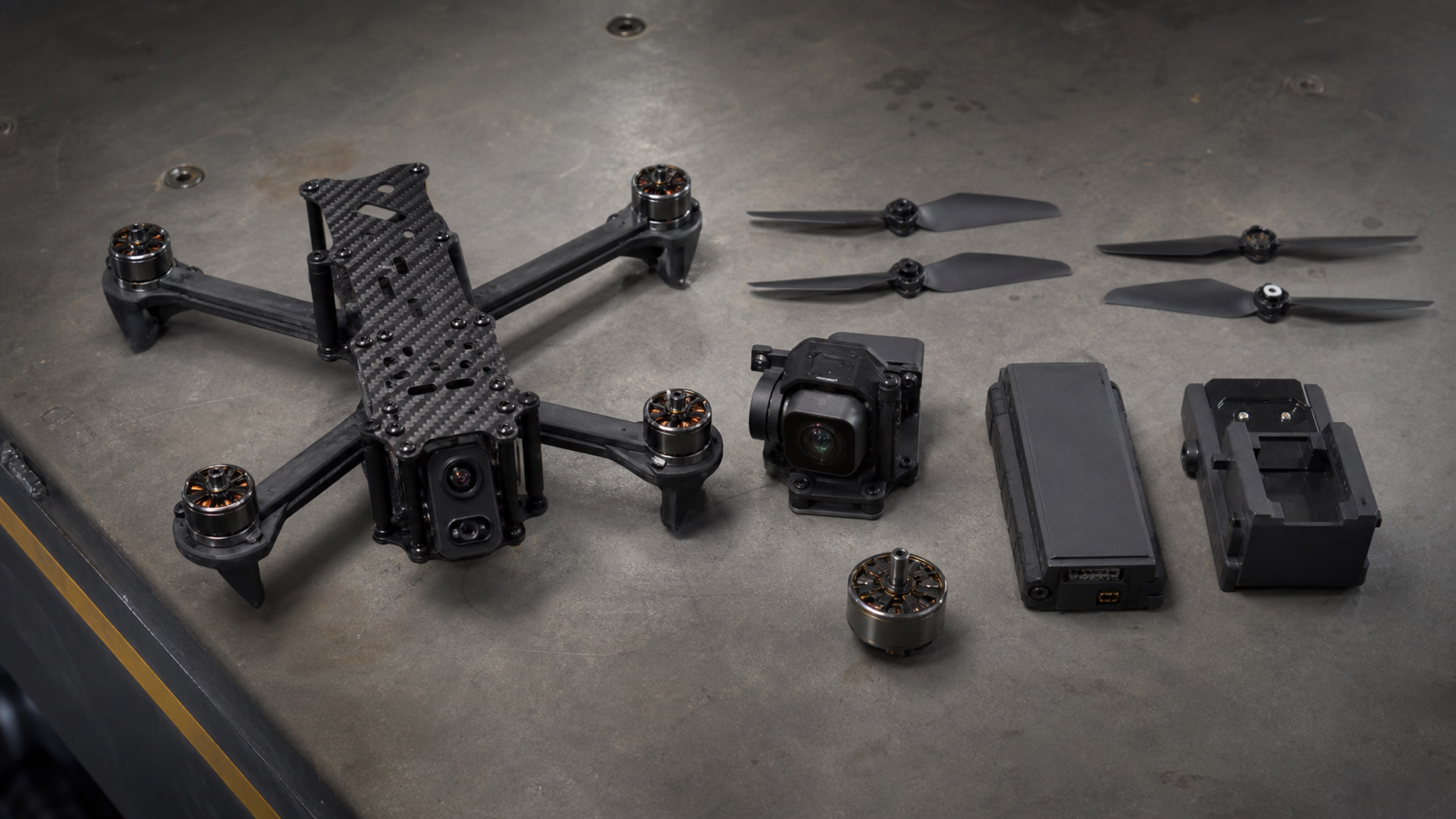
Not active yet: September 3 is the first entry date. The delayed component phase starts February 9, 2027.
The headings
| Chapter 99 | Treatment | Who it covers |
|---|---|---|
| 9903.08.20 | No change | Listed tariff provisions when the article isn’t for the covered UAS use |
| 9903.08.21 | +100% | Covered large UAS, thermal-imaging UAS, docking stations, and specified components |
| 9903.08.22 | +25% | Covered small UAS without thermal imaging; broader listed components from Feb. 9, 2027 |
| 9903.08.23 | +10% | Eligible UK products that meet the component-and-technology certification rule |
| 9903.08.24 | 15% total | Eligible Japan, Korea, Taiwan, Switzerland, Liechtenstein, and EU products |
| 9903.08.25 / .26 | No change | Specified approved onshoring programs; .25 ends Feb. 9, 2027 |
What gets 100%
Annex I covers remote- and non-remote-controlled UAS above 25 kilograms; covered small UAS that integrate thermal imaging; docking stations under specified electrical provisions; and certain parts for UAS over 25 kilograms. The parts scope excludes systems for retail delivery, agriculture, or sale to the Department of War.
The product list includes 8504.40.9580, 8537.10.9170, UAS subheadings in 8806, and specified 8807 parts provisions. The scope notes matter. Typing “drone parts” into a product title doesn’t resolve them.
What gets 25%
Annex II covers small UAS of 25 kilograms or less when they don’t have thermal imaging. Annex III adds listed propellers, undercarriages, and other UAS components at 25% beginning February 9, 2027. If a component is already covered by Annex I, the Annex I treatment wins.
The partner rates have strings attached
Eligible goods from Japan, Korea, Taiwan, Switzerland, Liechtenstein, and EU member states can use a total 15% rate including Column 1 duty. Eligible UK goods get an additional 10% rate. But origin alone isn’t enough: importers must satisfy the “substantially all critical components and technology” certification condition, and Commerce must establish the process and inform CBP which products qualify.
Until those operational facts exist for an entry, the lower rate is not something a merchant should guess into a margin sheet.
Some companies get a delayed start
Companies on the specified Blue UAS, Blue UAS Framework, or FCC Conditional Approval lists on September 2 may get a 180-day delayed effective date for covered listed products and components. Commerce must tell CBP which companies and products qualify. Again: company-list status is an entry fact, not an inference.
What to do now
- Map every drone and UAS component to the current HTSUS code.
- Separate thermal from non-thermal small UAS and capture maximum take-off weight.
- Get supplier evidence for component origin if you expect partner treatment.
- Reprice September arrivals before they ship, then recheck CBP implementation instructions.
- Leave delayed-list and onshoring cases in review until the agency confirms them.
September entries need exact filing facts
The public calculator can evaluate the reviewed UAS ad-valorem layer for a caller-supplied 9903.08.20–9903.08.26 heading and entry instant. It does not infer UAS scope, certification, company-list status, or the heading.
Open the exact-input duty calculator See TariffShieldQuick answers
No universal current U.S. tariff rate is available from country of origin alone.
Classification, product scope, origin, entry time, base duty, Chapter 99 treatment, quota or certification facts, and exceptions can change the result. Missing fact? Keep the number in review.
Official sources
- White House — UAS Section 232 proclamation
- White House — UAS Annex I
- White House — UAS Annex II
- White House — UAS Annex III
- White House — UAS Annex IV (HTSUS headings)
- USITC — current Harmonized Tariff Schedule
Checked through: August 17, 2026 at 13:00 UTC. Re-review required no later than August 24, 2026 at 13:00 UTC or sooner if an official source changes.
Disclaimer: Informational content only. Verify the current HTSUS and CBP instructions or use a licensed customs broker for an entry-specific decision.